Introduction: When Unwanted Links Become a Website Problem
SEO case study Singapore: What happens when an established business discovers thousands of unexpected links associated with its website, including content in languages unrelated to its products or customers?
For Dashmesh Singapore, a food distributor serving the local market since 1985, this was a problem that needed attention.
Its original website experienced Google Search Console issues involving thousands of unwanted Chinese and Japanese links.
Although the company’s core business focused on Indian and South Asian food distribution, the unexpected links raised concerns about its website’s search presence.
TechWeb worked with Dashmesh to address the unwanted links, develop a new website and create credible content to support its SEO.
This project demonstrates an important lesson for Singapore SMEs: an effective website requires more than professional design. Technical SEO, content quality and ongoing maintenance are equally important.
In this case study, we explore the challenges, the website improvements and five practical lessons businesses can apply to protect and strengthen their own online presence.
1. About Dashmesh: A Trusted Food Distributor in Singapore
Dashmesh Singapore is an established wholesale food distributor specialising in Indian, Pakistani and South Asian grocery products.
Founded in 1985, the company supplies food products to businesses and consumers across Singapore.
Its product range includes:
- Rice and basmati rice
- Pulses, lentils and nuts
- Spices and seasonings
- Frozen and dairy products
- Snacks and speciality groceries
The business also distributes products under its own brands, including Temasek Gold and Malika.
Why a Strong Website Matters for Food Distributors
For a wholesale food distributor, a website is an important business asset.
Potential customers may search Google for terms such as “Indian grocery supplier Singapore”, “basmati rice wholesale Singapore” or “lentils supplier Singapore”.
A properly organised website helps these customers discover relevant products, learn about the company and make enquiries.
However, technical problems can affect how search engines discover and present a business online.
This was one of the challenges facing Dashmesh.
2. The SEO Problem: Thousands of Unwanted Chinese and Japanese Links
One of the key concerns with Dashmesh’s original website involved unexpected links appearing in Google Search Console.
Thousands of links containing Chinese and Japanese content had been created, despite having no apparent relevance to the company’s core food distribution business.
Such findings can create uncertainty for website owners.
Are the links coming from unrelated external websites? Are unexpected pages being indexed? Has someone gained unauthorised access to the website?
These questions require investigation because different problems require different solutions.
Understanding the Difference Between Spam Backlinks and Unwanted Pages
Two issues are commonly confused.
Spam backlinks are links from external websites pointing to your domain. Some may originate from irrelevant or low-quality sources.
Unwanted indexed pages are URLs under your own website’s domain that appear in search results even though they were not intentionally published.
The second issue can sometimes indicate a website security problem.
Google has documented a type of website compromise known as the Japanese keyword hack, where attackers generate unauthorised Japanese-language pages on affected websites.
However, the presence of foreign-language links does not automatically establish that a website has been hacked.
The correct response begins with identifying exactly what has happened.
How Unwanted Search Content Can Affect a Business
Unexpected links or pages may introduce several risks:
1. Confusing search results
Customers may encounter unfamiliar or irrelevant content associated with the business.
2. Potential security concerns
Unauthorised pages may indicate vulnerabilities requiring further investigation.
3. Indexing problems
Search engines may discover URLs that do not contribute to the website’s intended purpose.
4. Reduced confidence
Suspicious content appearing under a company’s domain can undermine customer trust.
5. Additional maintenance costs
Investigating and correcting technical problems can require significant time and specialist attention.
Google’s Search spam policies explain how hacked content and other forms of search manipulation can affect websites.
The important point is that business owners should investigate unusual search activity rather than ignore it.
3. How TechWeb Helped Improve the Dashmesh Website
The Dashmesh project involved addressing the unwanted links and developing a website with more relevant business content.
This work reflects TechWeb’s broader approach to integrating website development with SEO planning.
Addressing the Unwanted Links
A priority was resolving the unwanted link problem identified on Dashmesh’s original website.
TechWeb helped clear the links that had raised concerns in Google Search Console.
This illustrates why website redevelopment should consider existing technical and search-related problems.
Building a visually appealing website without addressing underlying issues can leave a business exposed to the same concerns.
A structured SEO review should consider indexing, website architecture, unexpected URLs and search performance before determining the appropriate corrective actions.
Businesses experiencing similar problems can explore TechWeb’s SEO services in Singapore, which cover technical SEO, on-page optimisation, content planning and website audits.
Developing a More Effective Website Structure
A wholesale distributor needs a website that communicates its products and capabilities clearly.
Dashmesh’s website presents major categories such as rice, pulses, spices, frozen products and speciality groceries.
This category-based approach helps visitors navigate the company’s range and locate the information they need.
A well-planned website structure also supports SEO by making relationships between pages easier to understand.
For example, a clear hierarchy can help organise information around:
- Major product categories
- Individual products and brands
- Company background and capabilities
- Industry-specific information
- Enquiries and contact details
Good navigation and descriptive URLs benefit visitors while helping search engines discover relevant information.
Our guide to SEO-ready website development in Singapore explains why these considerations should be included from the beginning of a website project.
Building Credible Content for Search Visibility
Another important area was developing relevant website content to support Dashmesh’s SEO.
Publishing more pages does not automatically improve rankings.
Effective SEO content should match what potential customers are searching for and provide genuinely useful information.
For a food distributor, this can involve explaining products, helping buyers compare options and answering common purchasing questions.
The current Dashmesh website includes examples of this approach:
- Basmati Rice Grades Explained helps restaurant buyers understand different rice varieties and processing methods.
- Lentils Wholesale Singapore addresses considerations for businesses purchasing lentils in bulk.
- Restaurant Inventory Management Singapore provides practical information for food businesses managing stock and supply.
These articles demonstrate how a distributor can move beyond basic product listings and provide content relevant to its customers.
Such content can support topical relevance, create opportunities for internal linking and help potential buyers make informed decisions.
TechWeb’s content creation services in Singapore focus on developing relevant website content and SEO articles aligned with business objectives.
4. Why Technical SEO Is Essential for Singapore Business Websites
Technical SEO helps search engines access, understand and index website content.
A website may contain excellent information, but technical problems can prevent that information from being discovered effectively.
Important technical SEO considerations include:
Website Crawling and Indexing
Search engines need to discover the correct pages.
An XML sitemap helps identify important URLs, while appropriate indexing settings can prevent unnecessary pages from appearing in search results.
Google Search Console provides information about pages Google has indexed and reasons why other pages may not be indexed.
Website Security
Outdated software, weak credentials and insecure configurations can increase security risks.
Website owners should regularly review user permissions, software versions and hosting settings.
Google provides guidance on investigating and fixing compromised websites.
Mobile Usability and Website Performance
A website should function properly on smartphones, tablets and desktop devices.
Pages that are difficult to navigate or slow to load can frustrate visitors.
Website performance also affects the overall user experience.
Internal Linking and Website Architecture
Relevant internal links help visitors move between related pages.
For example, a product category page can link to supporting buying guides, while an educational article can link to the appropriate product or enquiry page.
Google’s SEO Starter Guide outlines the fundamentals of making websites more accessible and understandable to search engines.
Together, these technical foundations support an effective long-term SEO strategy.
5. Five Essential Website SEO Lessons for Singapore SMEs
The Dashmesh project highlights several principles that other businesses can apply.
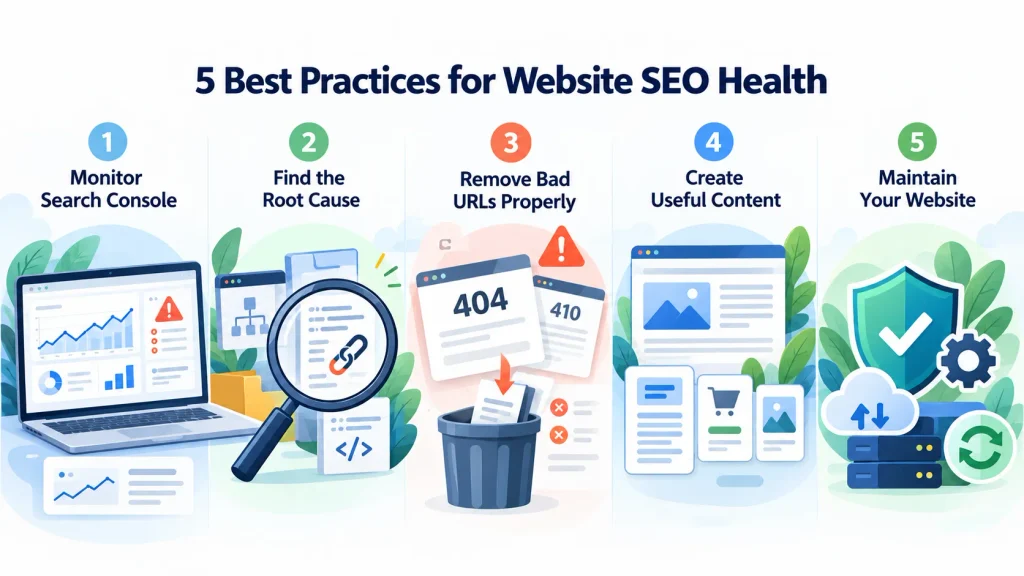
Lesson 1: Monitor Google Search Console Regularly
Many companies invest in website development but rarely review their search performance.
Google Search Console is a free tool that provides valuable information about how Google interacts with your website.
Business owners should review:
- Search impressions and clicks
- Pages indexed by Google
- Unexpected indexing changes
- XML sitemap status
- Website security warnings
- Manual actions
- Search queries bringing visitors to the website
Unexpected changes may indicate technical problems worth investigating.
Recommendation: Review Search Console at least monthly and investigate significant changes promptly.
Lesson 2: Identify the Cause Before Removing Spam Links
When suspicious links appear, it is tempting to remove everything immediately.
However, not every unfamiliar link is harmful.
Google already has systems designed to identify and neutralise many forms of link spam.
If the problem involves external backlinks, deleting website pages may accomplish nothing.
If unauthorised pages have been created under your own domain, the investigation may need to cover website files, administrator accounts and security settings.
The appropriate response depends on the evidence.
Recommendation: Determine whether the issue involves external links, unwanted indexed URLs or an actual website compromise before taking corrective action.
Lesson 3: Use the Correct Method to Remove Unwanted Indexed Pages
When unwanted pages exist under your domain, removing them properly involves more than deleting their visible content.
Depending on the circumstances, affected URLs may need to return an HTTP 404 Not Found or 410 Gone response.
These responses help search engines recognise that the pages no longer exist.
Google’s Search Console Removals tool can also temporarily hide certain URLs from search results.
However, temporary removal does not permanently delete the content or resolve an underlying security problem.
If the pages were generated through unauthorised access, that access must also be addressed.
Recommendation: Fix the source of unwanted content and verify that the affected URLs are handled correctly.
Lesson 4: Create Useful Content Around Customer Needs
Once technical issues have been addressed, businesses should focus on providing valuable content.
For example, a food distributor can publish guidance about ingredient selection, product comparisons and wholesale purchasing.
A professional services company might publish articles answering common customer questions or explaining its service processes.
Useful content can help businesses:
- Address relevant search queries
- Explain products and services
- Demonstrate industry understanding
- Support internal linking
- Guide visitors towards appropriate enquiry pages
The goal is not to publish as many articles as possible.
It is to provide information that customers genuinely need.
Our Business Website Checklist Singapore covers additional steps businesses can take to strengthen website content, usability and performance.
Lesson 5: Invest in Ongoing Website Maintenance
A website should not be neglected after launch.
Content becomes outdated, software requires updates and technical issues can develop over time.
A structured maintenance programme should include:
- Regular website updates
- Plugin and theme maintenance
- Security checks
- Scheduled backups
- Broken link monitoring
- Website speed reviews
- Search Console checks
- Content updates
- Form and enquiry testing
These tasks can help businesses identify potential problems early and maintain a reliable website.
TechWeb’s website maintenance services in Singapore support businesses with updates, backups, security reviews and ongoing technical assistance.
Recommendation: Assign clear responsibility for website maintenance and establish a regular review schedule.
6. Website Spam Cleanup Singapore: A Simple Monthly Checklist
Business owners do not need to be SEO specialists to identify some common warning signs.
Start with these five checks.
1. Search for your business website on Google
Enter:
site:yourdomain.com.sg
Review the results for unfamiliar URLs, unrelated titles or unexpected content.
Remember that this search does not provide a complete or precise count of indexed pages.
2. Review Google Search Console
Check the Performance, Pages and Security Issues reports.
Look for unusual patterns, unfamiliar URLs and changes in search visibility.
3. Check your XML sitemap
Open your website’s sitemap and confirm that it contains relevant, intended URLs.
Many WordPress websites use a sitemap location such as:
https://yourdomain.com.sg/sitemap_index.xml
Your actual sitemap address may differ.
4. Review Website Administrator Access
Confirm that only authorised people have access to your website, hosting and Search Console properties.
Remove unnecessary access and use strong authentication.
5. Confirm Updates and Backups
Check whether website software is current and whether usable backups are available.
Make sure someone is responsible for handling website problems.
These checks cannot replace a technical security audit, but they provide a useful starting point for identifying issues that require professional attention.
7. What the Dashmesh SEO Case Study Means for Singapore SMEs
The Dashmesh project demonstrates why website design and SEO should be considered together.
A successful online presence requires several connected elements.
Website development establishes the structure, design and functionality customers interact with.
Technical SEO helps search engines discover and understand the correct pages.
Content creation provides useful information aligned with customer search intent.
Website maintenance supports reliability and helps businesses respond to technical issues over time.
Focusing on only one of these areas can limit the effectiveness of the others.
For example, an attractive website may struggle to attract organic traffic if its pages are not indexed correctly.
Likewise, publishing SEO articles may deliver limited value if visitors encounter poor navigation, outdated product information or broken enquiry forms.
The broader lesson is that businesses should view their websites as ongoing digital assets requiring regular improvement.
Frequently Asked Questions
What are spam links in SEO?
Spam links generally refer to links created primarily to manipulate search rankings rather than provide genuine value.
They may appear on unrelated external websites or be associated with unauthorised content.
Not every low-quality backlink causes SEO problems, and not every unusual link indicates a website security breach.
Why does my website show Chinese or Japanese pages in Google?
Unexpected foreign-language content can have several causes, including previously generated pages, configuration issues or unauthorised website content.
Google has documented a specific website compromise called the Japanese keyword hack.
However, the cause should be verified before assuming a website has been hacked.
Can spam links affect Google rankings?
Potentially, depending on the type of links and the circumstances.
Google attempts to identify and neutralise many spam links automatically.
However, unauthorised pages or other website problems may require technical action.
A proper assessment is more useful than immediately deleting pages or disavowing backlinks.
How long does Google take to remove unwanted URLs?
There is no guaranteed timeline.
Google must recrawl or reprocess affected URLs before permanent indexing changes are reflected.
This may take days, weeks or longer depending on the website and circumstances.
Temporary removal requests may hide eligible URLs sooner, but the underlying problem must still be resolved.
Do I need to rebuild my website after discovering spam?
Not necessarily.
Some problems can be resolved with targeted technical corrections.
A complete redevelopment may be appropriate when the website also has broader issues involving design, content structure, functionality or maintainability.
How often should businesses perform an SEO audit?
A monthly Search Console review is a practical starting point for many Singapore SMEs.
A more comprehensive SEO audit can be conducted periodically or when significant problems arise, such as unexpected traffic declines, indexing issues or major website changes.
Can TechWeb help with technical SEO problems?
TechWeb provides SEO support, website development, content creation and website maintenance services for Singapore businesses.
Depending on the issue, a website assessment can help identify problems involving structure, indexing, content and general technical performance.
Specialist security investigations may be necessary where malware or unauthorised access is suspected.
Conclusion: Building a Stronger and More Reliable Website
The Dashmesh SEO case study highlights an important lesson for Singapore businesses.
A website may appear professional while experiencing technical or search visibility issues that are not immediately obvious to its owners.
For Dashmesh, thousands of unwanted Chinese and Japanese links associated with its original website became a concern.
TechWeb helped address the unwanted links, develop the company’s website and create credible content to support its SEO.
The project illustrates the importance of looking beyond website appearance and considering the technical foundations, content quality and maintenance required for long-term performance.
For Singapore SMEs, the takeaway is clear:
An effective business website combines professional development, technical SEO, useful content and regular maintenance.
Businesses that review these areas consistently are better positioned to identify problems, improve their online presence and provide a reliable experience for potential customers.
Is Your Website Experiencing SEO or Technical Problems?
Have you noticed unexpected URLs in Google Search Console, unusual changes in search traffic or outdated content on your business website?
TechWeb helps Singapore businesses review their websites, improve SEO foundations and develop digital experiences that support business growth.
Whether you need website improvements, technical SEO support or ongoing maintenance, understanding your website’s current condition is the first step.
Request a Free Website Review from TechWeb
You can also explore our SEO services in Singapore or contact TechWeb to discuss your business website.