Introduction: Understanding What Is SEO Digital Marketing
Many people hear the term SEO often, yet they still ask the same question: what is SEO digital marketing, and why does it matter so much today?
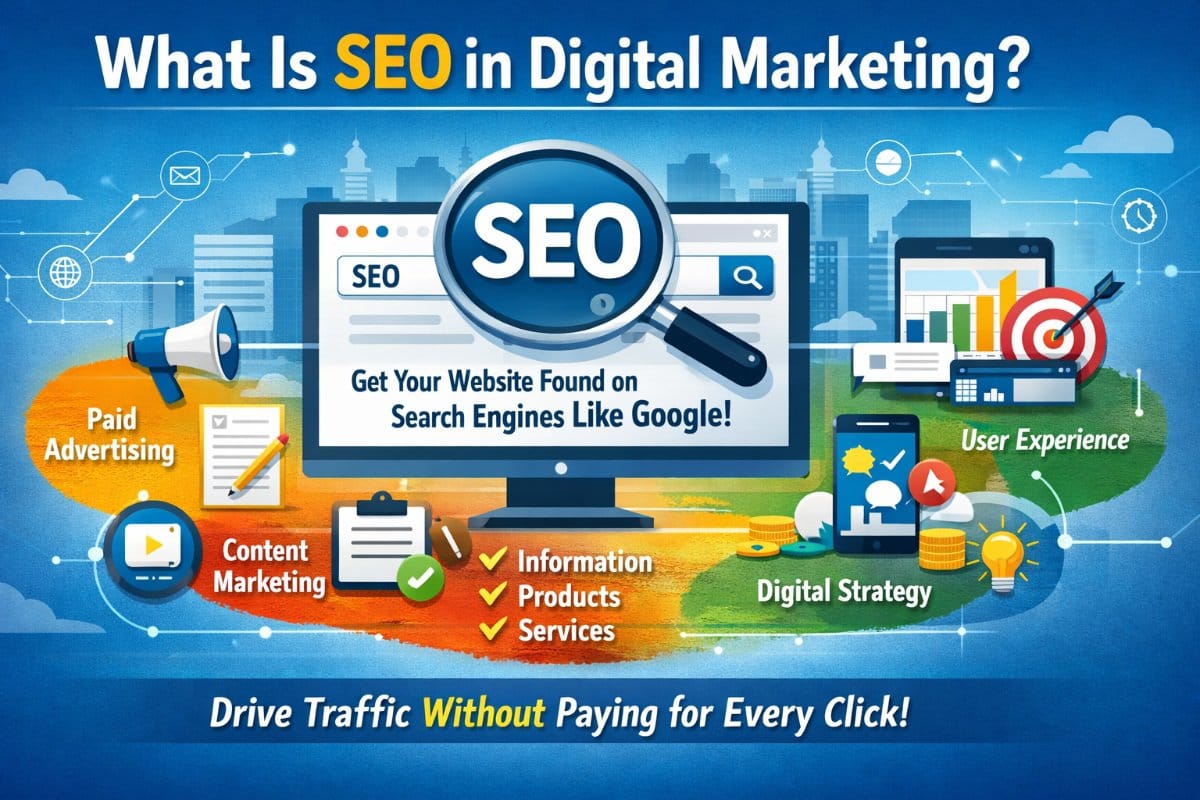
SEO digital marketing is the practice of optimizing your online content to rank higher in search engine results pages (SERPs). This means when someone searches for terms related to your products or services on platforms like Google, Bing, or DuckDuckGo, your website appears prominently among the top results. The goal is to attract more organic, or unpaid, traffic to your website.
This guide explains what SEO digital marketing really is, how it works, and why it plays such an important role in online success in a simple and friendly way.
What Is SEO Digital Marketing? A Simple Explanation
SEO stands for Search Engine Optimisation. SEO digital marketing means optimizing website content so search engines can understand it and show it to users searching for related topics. SEO connects search intent with helpful answers. SEO does not rely on shortcuts. SEO works by improving clarity, relevance and user experience. When content genuinely helps people, search engines reward it with better visibility.
How Search engines work in SEO Digital Marketing
Digital marketing includes many strategies such as:
Content marketing
Social media marketing
Email marketing
Paid advertising
SEO digital marketing
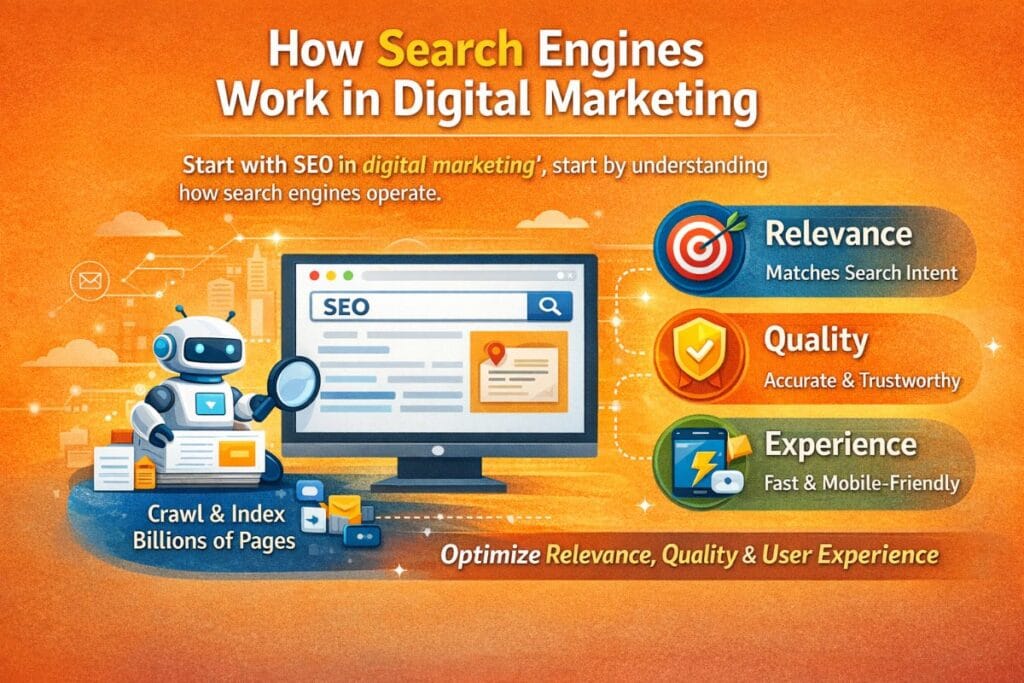
SEO strengthens every digital marketing channel. SEO improves discoverability. SEO builds trust. SEO supports long-term growth even when ad budgets stop. Search engines assess pages using three main factors:
- Relevance – Does the page match the user’s intent and search terms?
- Quality – Is the content accurate, useful, and trustworthy?
- Experience – Is the page fast, mobile-friendly, and easy to navigate?
That connection explains why learning what is SEO digital marketing matters for businesses of every size. SEO in digital marketing is the practice of optimizing content and site performance to improve relevance, quality, and user experience so pages rank higher in search results.
Search Intent: The Heart of SEO
Not every search has the same goal. Some users are looking for information, others want to find a specific site, compare options, or complete a purchase.
Common types of search intent include:
- Informational – seeking knowledge or answers
- Navigational – trying to reach a particular website or page
- Commercial – researching and comparing products or services
- Transactional – ready to buy or take a specific action
Effective SEO means matching your content to the user’s intent. Understanding what is SEO in digital marketing goes beyond targeting keywords; it’s about providing clear, relevant answers to real questions.
Core Components of SEO Digital Marketing
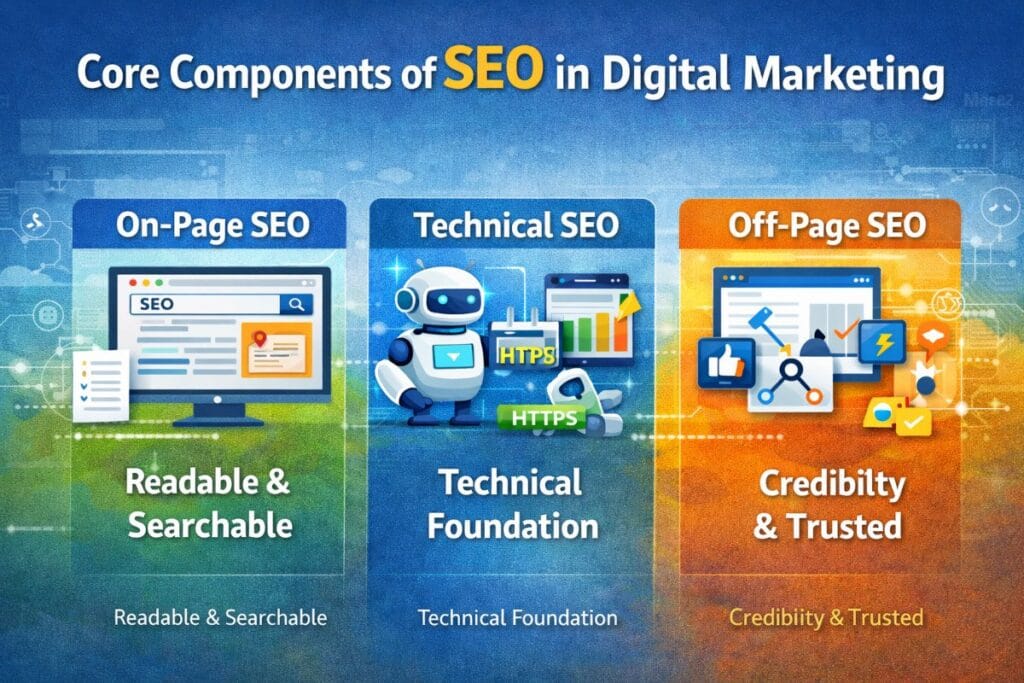
Understanding SEO digital marketing means knowing its three main pillars, which work together to improve a site’s visibility and performance.
On-Page SEO
On-page SEO covers the elements users encounter on your website and how content is presented to search engines. Important aspects include page titles and headings, clear content structure, strategic keyword use, and internal linking.
Well-implemented on-page SEO makes content easy to read, understand, and index.
Technical SEO
Technical SEO ensures your site functions smoothly behind the scenes so search engines can crawl and rank it effectively. Key elements are fast page load times, mobile-friendly design, secure HTTPS connections, a clear site structure, and proper indexing.
Even excellent content can underperform without a solid technical foundation.
Off-Page SEO
Off-page SEO builds your site’s reputation across the web. This includes earning high-quality backlinks, generating brand mentions, and establishing online trust signals.
Backlinks and positive signals act like endorsements, helping search engines view your site as credible and authoritative.
Understanding what is SEO in digital marketing helps you see how it complements other channels to attract, engage, and convert customers over time.
Why SEO Digital Marketing Matters More Than Ever in 2026
The digital landscape is constantly shifting and the importance of SEO will only continue to grow. Here’s why businesses must prioritize SEO for 2026 and beyond:
1. Dominance of Search Engines in Discovery
As mentioned, search engines are the primary gateway to the internet for most users. In 2026, this trend is unlikely to change. People turn to search engines to find answers, discover new products, research services, and solve problems. If your business isn’t visible on the first page of search results, you’re essentially invisible to a vast majority of potential customers.
2. The Rise of Voice Search and AI
Voice search is rapidly gaining traction, with more people using smart speakers and voice assistants to conduct searches. These searches are often longer, more conversational, and more specific. SEO strategies need to adapt to this by focusing on long-tail keywords and natural language queries. Furthermore, the increasing integration of Artificial Intelligence (AI) in search algorithms means that search engines are becoming smarter at understanding user intent and context, making high-quality, user-centric content even more critical.
3. Increasing Competition Online
The barrier to entry for starting an online business has never been lower. This means more businesses are competing for the same online attention. SEO provides a sustainable way to stand out from the crowd and capture your share of the market. Relying solely on paid advertising can be expensive and unsustainable in the long run, whereas a strong SEO foundation can provide consistent organic traffic.
4. Building Trust and Credibility
Users inherently trust search engines to provide the most relevant and reliable information. Therefore, ranking high in search results lends significant credibility to your brand. A website that appears on the first page is perceived as more authoritative and trustworthy than one buried on page five. This trust translates into higher click-through rates and a greater likelihood of conversion.
5. Cost-Effectiveness and Long-Term ROI
While SEO requires an upfront investment of time and resources, its long-term return on investment (ROI) is substantial. Unlike paid advertising, where traffic stops the moment you stop paying, SEO efforts build upon themselves. A well-optimized website can continue to attract organic traffic for months and years to come, making it a highly cost-effective marketing channel.
6. Enhanced User Experience
Modern SEO practices are deeply intertwined with user experience (UX). Search engines prioritize websites that are fast, mobile-friendly, easy to navigate, and provide valuable content. By focusing on SEO, you’re inherently improving the overall experience for your website visitors, which can lead to longer dwell times, lower bounce rates, and increased conversions.
7. Data-Driven Insights and Adaptability
SEO provides a wealth of data that can inform your overall digital marketing strategy. Tools like Google Analytics and Google Search Console offer insights into user behavior, popular content, and search queries. This data allows you to continuously refine your approach, adapt to changing search trends, and make informed decisions about your content and marketing efforts.
Key SEO Trends to Watch in 2026
To stay ahead of the curve, businesses should be aware of emerging SEO trends:
- AI-Powered Search: As AI becomes more sophisticated, search engines will better understand user intent. This means content needs to be more comprehensive and answer questions thoroughly.
- E-E-A-T (Experience, Expertise, Authoritativeness, Trustworthiness): Google’s guidelines emphasize these factors, especially for YMYL (Your Money or Your Life) topics. Demonstrating real-world experience, showcasing expert authors, and building a trustworthy online presence are paramount.
- Video SEO: Video content is increasingly popular. Optimizing videos for search, including transcriptions and descriptive titles, will become more important.
- Core Web Vitals: Google’s metrics for measuring user experience (loading speed, interactivity, and visual stability) will remain a key ranking factor.
- Topical Authority: Building comprehensive content clusters around specific topics will signal to search engines that you are an authority in that niche.
Implementing a Successful SEO Strategy for 2026
To ensure your business is well-positioned for success in 2026, consider the following steps:
- Define Your Goals: What do you want to achieve with SEO? More leads? Increased brand awareness? Higher sales?
- Understand Your Audience: Who are you trying to reach? What are their search habits and pain points?
- Conduct Thorough Keyword Research: Identify relevant, high-intent keywords.
- Create High-Quality, User-Centric Content: Focus on providing value and answering user questions comprehensively.
- Optimize Your Website Technically: Ensure it’s fast, mobile-friendly, and easy to navigate.
- Build High-Quality Backlinks: Earn links from reputable sources.
- Monitor and Analyze Performance: Regularly track your rankings, traffic, and conversions using analytics tools.
- Stay Updated: The SEO landscape is dynamic. Continuously learn about algorithm updates and new best practices.
Common SEO Misunderstandings
Many businesses struggle with SEO because they have unrealistic expectations or misunderstand how it works.
SEO Is Not Instant
SEO is a long-term process that requires consistent effort. Rankings and traffic improve gradually as you build authority and optimize content over time.
SEO Is Not About Tricks
Modern SEO emphasizes quality, relevance, and user experience rather than shortcuts. Effective strategies focus on useful content, proper technical setup, and genuine engagement.
Knowing what is SEO in digital marketing means recognizing it as a sustainable strategy for growth—not a quick fix—and committing to ongoing improvement.
Measuring SEO Success in Digital Marketing
If you’re asking “what is SEO in digital marketing,” one key aspect is measuring its impact. SEO should always be tracked to determine whether it contributes to your overall digital marketing objectives.
Useful metrics to monitor include:
- Organic traffic growth: Increases in visitors from search engines indicate improved visibility.
- Keyword visibility: Higher rankings and more visible keywords mean better chances of attracting relevant users.
- Engagement metrics: Time on page, bounce rate, and pages per session show how well content meets user intent.
- Leads and enquiries: Conversions, form submissions, and calls demonstrate SEO’s role in driving business results.
Together, these indicators reveal whether your SEO efforts are supporting broader marketing goals and helping you reach the right audience.
Implementing a Successful SEO Strategy for 2026
To ensure your business is well-positioned for success in 2026, consider the following steps:
- Define Your Goals: What do you want to achieve with SEO? More leads? Increased brand awareness? Higher sales?
- Understand Your Audience: Who are you trying to reach? What are their search habits and pain points?
- Conduct Thorough Keyword Research: Identify relevant, high-intent keywords.
- Create High-Quality, User-Centric Content: Focus on providing value and answering user questions comprehensively.
- Optimize Your Website Technically: Ensure it’s fast, mobile-friendly, and easy to navigate.
- Build High-Quality Backlinks: Earn links from reputable sources.
- Monitor and Analyze Performance: Regularly track your rankings, traffic, and conversions using analytics tools.
- Stay Updated: The SEO landscape is dynamic. Continuously learn about algorithm updates and new best practices.
Conclusion
SEO digital marketing is not a one-time task but an ongoing process that requires consistent effort and adaptation. In 2026, its importance will be amplified by the continued dominance of search engines, the rise of new search behaviors like voice search, and the ever-increasing online competition. By investing in a robust SEO strategy, businesses can not only improve their online visibility but also build lasting credibility, foster customer trust, and achieve sustainable growth in the digital age. Ignoring SEO is no longer an option; it’s a critical pathway to online relevance and success.
Frequently Asked Questions (FAQs)
1. What is the difference between SEO and SEM?
SEO (Search Engine Optimization) focuses on improving a website’s visibility in organic (unpaid) search results. SEM (Search Engine Marketing) is a broader term that includes SEO as well as paid advertising (like Google Ads) to increase visibility in search engine results pages.
2. How long does it take to see results from SEO?
SEO results typically take time. While some initial improvements can be seen within weeks, significant and sustainable results often take anywhere from 3 to 6 months, or even longer, depending on the competitiveness of your industry and the effectiveness of your strategy. (Source: Moz)
3. Is SEO still important in 2026?
Absolutely. SEO is more important than ever. With the vast majority of online experiences starting with a search engine, ranking high organically is crucial for visibility, credibility, and attracting customers. Trends like voice search and AI only emphasize the need for smart SEO practices.
4. What are the most important ranking factors for Google?
While Google’s algorithm is complex and constantly updated, key factors include high-quality content, backlinks from authoritative sites, mobile-friendliness, website speed (Core Web Vitals), user experience, and demonstrating E-E-A-T (Experience, Expertise, Authoritativeness, Trustworthiness).
5. How can I improve my website’s SEO without a large budget?
You can focus on on-page optimization (keyword research, content creation, title tags), technical SEO basics (site speed, mobile-friendliness), and building natural backlinks through great content and outreach. Utilizing free tools like Google Analytics and Google Search Console is also essential.
6. What is E-E-A-T and why is it important for SEO?
E-E-A-T stands for Experience, Expertise, Authoritativeness, and Trustworthiness. Google uses these factors to evaluate the quality of content and the credibility of its creator, especially for topics related to health, finance, and safety (YMYL). Demonstrating these qualities helps your content rank higher and builds user trust.