Why SEO for small businesses in Singapore is a Game-Changer
Did you know that over 90% of online experiences begin with a search engine? For small businesses in Singapore, this isn’t just a statistic; it’s a powerful indicator of where potential customers are looking for products and services. In today’s digital-first world, Search Engine Optimization (SEO) is no longer a luxury; it’s a necessity for survival and growth, especially for the vibrant ecosystem of small and medium-sized enterprises (SMEs) in Singapore.
Singapore is a bustling hub of innovation and commerce, with a highly competitive market. For a small business to stand out amidst the noise, a strong online presence is paramount. This is where SEO steps in, acting as the digital bridge connecting your business with the customers actively searching for what you offer. Let’s dive deep into why neglecting SEO is akin to opening a shop in a prime location but keeping the shutters down.
Understanding the Power of Search Engines in Singapore
In Singapore, internet penetration is incredibly high, with a significant portion of the population relying on search engines like Google to find local businesses, compare prices, and read reviews. When someone in Singapore needs a new laptop, searches for the “best cafe near me,” or looks for “plumbing services Singapore,” they turn to search engines. If your business isn’t visible on the first page of these search results, you’re essentially invisible to a vast majority of potential customers.
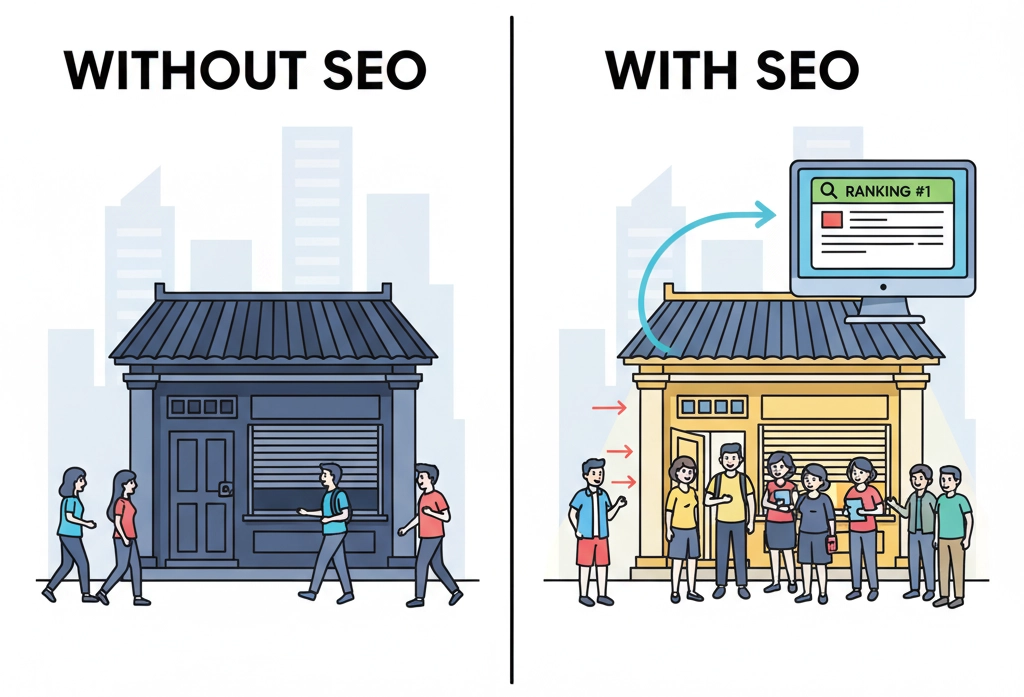
In Singapore, Small and Medium-Sized Enterprises (SMEs)form the backbone of the economy and typically include businesses with limited workforce size and revenue compared to large corporations. Despite their smaller scale, SMEs contribute significantly to employment and economic growth. For these businesses, SME digital marketing plays a crucial role. Digital marketing for SMEs refers to the use of online channels – such as search engines, websites, content marketing, and social media – to attract and convert customers.
Among these digital channels, SEO remains one of the most powerful because it ensures that SMEs are discoverable exactly when potential customers are actively searching for their products or services. A study by BrightLocal found that 97% of consumers who search for local businesses on their smartphones read reviews for local businesses. This highlights the immediate impact of local SEO for brick-and-mortar businesses in Singapore.
The Core Benefits of SEO for Small Businesses in Singapore
1. Increased Visibility and Brand Awareness
At its heart, SEO is about making your business more visible online. When potential customers perform searches related to your industry or services, SEO helps your website rank higher in search engine results pages (SERPs). This increased visibility translates directly into greater brand awareness. The more people see your business name and website, the more familiar and trustworthy it becomes.
Think of it like this: if your business is on page 10 of Google, it’s like being in the back of a crowded library, lost and unread. If you’re on page one, you’re at the front desk, accessible to everyone. For small businesses in Singapore, achieving this top-tier visibility can be a significant competitive advantage.
2. Driving Qualified Traffic to Your Website
SEO isn’t just about attracting any traffic; it’s about attracting qualified traffic. This means bringing people to your website who are genuinely interested in your products or services. When you optimize your website for relevant keywords that your target audience is using, you’re essentially filtering for users with intent.
For example, if you run a boutique coffee shop in Tiong Bahru, optimizing for “specialty coffee Tiong Bahru” will attract people who are specifically looking for that type of experience in your neighbourhood. This leads to higher conversion rates because these visitors are more likely to become paying customers. According to Genesys, businesses that focus on blogging are about 13 × more likely to have positive return on investment from their content marketing efforts compared with those that don’t blog or post inconsistently.
3. Building Trust and Credibility
Search engines, particularly Google, have sophisticated algorithms designed to rank websites that offer the best user experience and the most relevant, high-quality content. When your website consistently appears at the top of search results, it signals to users that your business is a reputable and authoritative source.
- Expertise: High-quality content demonstrates your knowledge in your field.
- Authority: Consistent ranking builds a perception of leadership.
- Trustworthiness: A well-optimized, secure website with clear contact information fosters trust.
In Singapore, where consumers are increasingly discerning, this built-in trust factor is invaluable. A study by Search Engine Journal indicated that 53% of all website traffic comes from organic search, reinforcing the idea that users trust organic results more than paid ads.
4. Cost-Effectiveness and Long-Term ROI
Compared to traditional advertising methods like print ads, radio spots, or even paid online advertising (PPC), SEO offers a significantly more cost-effective approach with a higher long-term return on investment (ROI). While PPC campaigns stop delivering traffic the moment you stop paying, the benefits of a well-executed SEO strategy can continue to pay dividends for months or even years.
While SEO requires an initial investment in time, expertise, and potentially tools, the organic traffic it generates is essentially “free” once you achieve good rankings. This makes it an ideal strategy for small businesses in Singapore with limited marketing budgets. Organic search traffic has a higher conversion rate than any other channel , further enhancing its cost-effectiveness.
5. Understanding Your Customers Better
SEO is not a set-it-and-forget-it strategy. It involves continuous monitoring, analysis, and adaptation. Tools like Google Analytics and Google Search Console provide invaluable data about who is visiting your website, how they found you, what they’re interested in, and how they interact with your content.
This data allows small businesses in Singapore to gain deep insights into customer behaviour, preferences, and search patterns. This understanding can inform not only your SEO strategy but also your product development, marketing messages, and overall business strategy. You can learn what keywords resonate, which pages are most popular, and where users might be dropping off, allowing for continuous improvement.
6. Competing with Larger Businesses
One of the most significant advantages of SEO for small businesses is its ability to level the playing field. While larger corporations may have bigger advertising budgets, SEO allows agile small businesses to compete effectively for online visibility. By focusing on niche keywords, local SEO, and creating superior content, a small business can often outrank larger, less specialized competitors for specific search queries.
This democratizing effect of SEO is particularly important in a market like Singapore, where SMEs form the backbone of the economy. It empowers them to capture market share that might otherwise be dominated by bigger players.
SEO Strategy Singapore
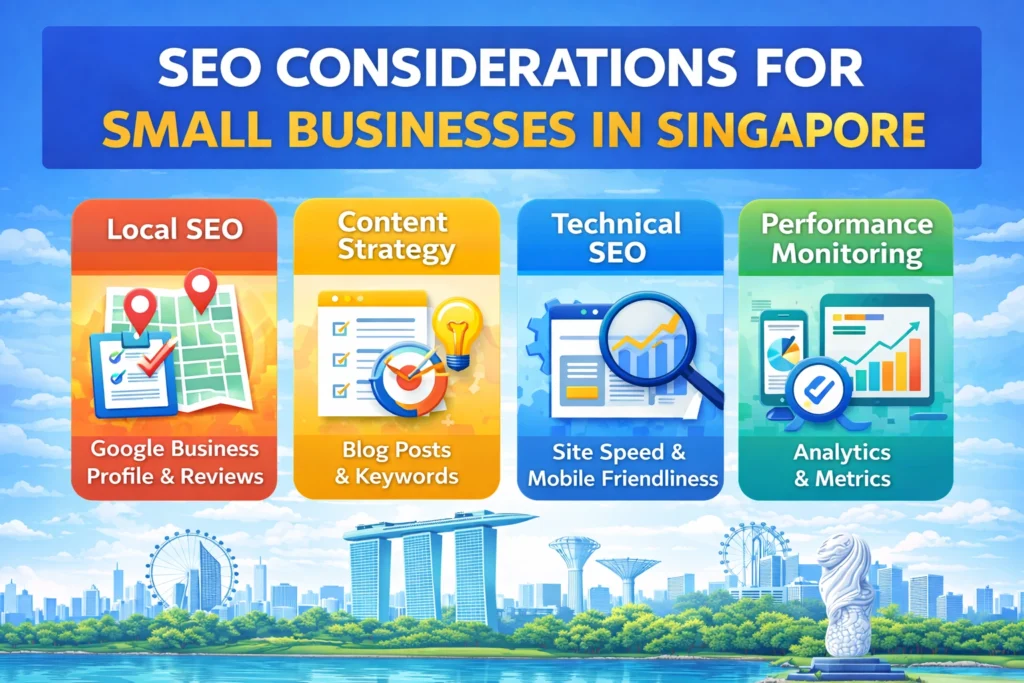
1. Keyword Research
This is the foundation of any successful SEO strategy. Identify the terms and phrases your potential customers are typing into search engines. Focus on a mix of broad and long-tail keywords (more specific phrases).
- Tools: Google Keyword Planner, Ahrefs, SEMrush.
- Consider: User intent, search volume, and competition.
2. On-Page Optimization
This involves optimizing individual web pages to rank higher and earn more relevant traffic. It includes:
- Title Tags and Meta Descriptions: Compelling and keyword-rich.
- Header Tags (H1, H2, H3): Structuring content logically.
- Content Optimization: Creating high-quality, informative, and engaging content that naturally incorporates keywords.
- Image Optimization: Using descriptive alt text.
- Internal Linking: Connecting relevant pages within your website.
3. Off-Page Optimization
This refers to activities undertaken outside of your website to improve its ranking. The most crucial aspect is building high-quality backlinks from reputable websites.
- Link Building: Earning links from other relevant sites through guest blogging, directory submissions, and creating shareable content.
- Local SEO: Optimizing for local searches. This includes:
- Google Business Profile (GBP): Claiming and optimizing your listing with accurate information, photos, and customer reviews.
- Local Citations: Ensuring your business name, address, and phone number (NAP) are consistent across online directories.
- Reviews: Encouraging and responding to customer reviews.
4. Technical SEO
This ensures your website is technically sound for search engines to crawl and index efficiently.
- Website Speed: Optimizing loading times.
- Mobile-Friendliness: Ensuring your site works perfectly on all devices (crucial in mobile-first Singapore).
- Site Architecture: Logical and easy-to-navigate structure.
- XML Sitemap: Helping search engines understand your site structure.
- Robots.txt: Guiding search engine crawlers.
- HTTPS: Ensuring a secure website.
5. Content Marketing
Creating valuable, relevant and consistent content to attract and retain a clearly defined audience. This could include blog posts, articles, infographics, videos, and case studies.
- Blog: Regularly publishing blog posts related to your industry is a highly effective SEO tactic. For example, a Singaporean accounting firm might write about “Tax Filing Deadlines for SMEs in Singapore” or “Choosing the Right Business Structure in Singapore.”
6. Performance Monitoring, Analytics & Metrics
SEO is not a one-time implementation – it is an ongoing, data-driven process. To ensure your SEO strategy in Singapore is delivering results, businesses must continuously monitor performance using tools such as Google Analytics and Google Search Console. These platforms provide insights into how users find your website, which keywords are driving traffic and how visitors interact with your pages.
Rather than tracking every possible metric, focus on what truly impacts business growth: organic traffic trends, keyword visibility, and conversions generated from search. Regular performance reviews allow SMEs to refine their strategy, strengthen high-performing pages and address underperforming areas. In Singapore’s competitive digital environment, consistent monitoring ensures your SEO investment translates into measurable business outcomes.
The Importance of Local SEO in Singapore
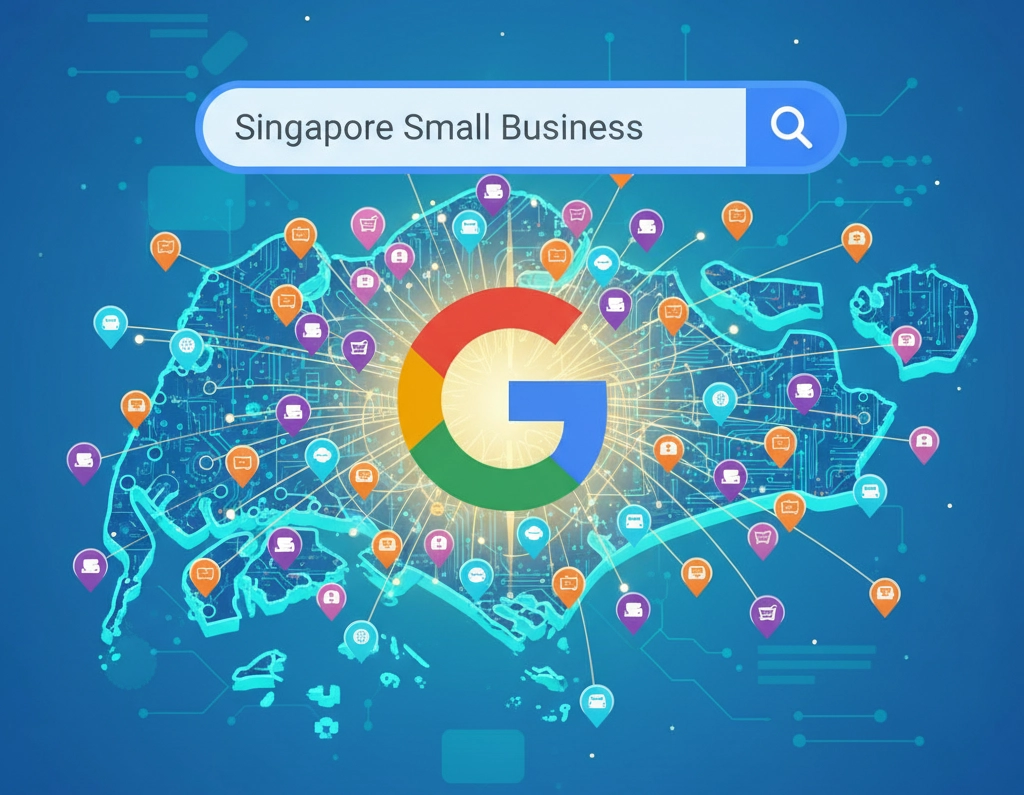
For many small businesses in Singapore, their primary customer base is local. This is where Local SEO becomes incredibly important. It’s about optimizing your online presence to attract more business from relevant local searches.
- “Near Me” Searches: As mentioned, people frequently search for businesses “near me.” Local SEO ensures you appear in these results.
- Google Maps: Optimizing your Google Business Profile helps you appear in Google Maps results, a crucial feature for local discovery.
- Local Directories: Being listed in Singapore-specific directories can boost visibility.
According to Google, 46% of all Google searches are looking for local information. This underscores the critical need for local businesses in Singapore to prioritize local SEO efforts.
Choosing the Right SEO Partner in Singapore
While it’s possible to learn and implement SEO yourself, it’s a complex and constantly evolving field. Many small businesses in Singapore find it beneficial to partner with an experienced SEO agency or consultant. When choosing a partner, consider:
- Proven Track Record: Look for testimonials from other Singaporean businesses.
- Transparency: Ensure they explain their strategies and provide regular reports.
- Understanding of the Singaporean Market: An agency familiar with local search behaviour and competition will be more effective.
- Holistic Approach: They should consider all aspects of SEO – on-page, off-page, technical, and content.
At TechWeb Singapore, we understand the unique challenges and opportunities facing small businesses in Singapore. We offer tailored SEO solutions designed to boost your online visibility and drive measurable results.
Challenges and Considerations
While the benefits are clear, it’s important to acknowledge potential challenges:
- Time Commitment: Effective SEO takes time and consistent effort.
- Algorithm Updates: Search engine algorithms change frequently, requiring ongoing adaptation.
- Competition: Singapore is a competitive market, so standing out requires a robust strategy.
- Patience: SEO is a marathon, not a sprint. Results typically take several months to become significant.
Conclusion: Invest in Your Online Future
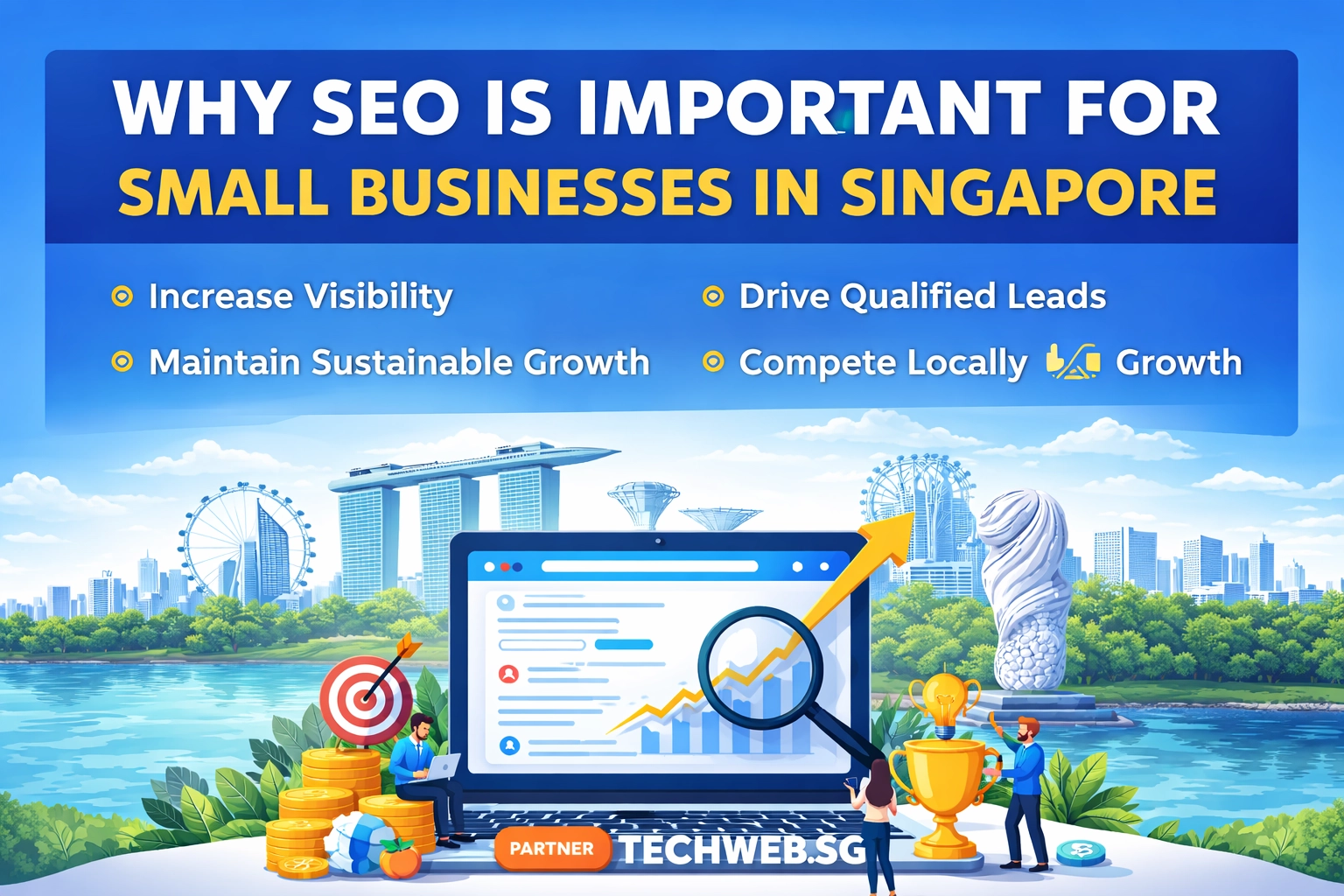
In the dynamic digital landscape of Singapore, SEO is not an optional add-on; it’s a fundamental pillar of a successful small business strategy. It’s the most effective way to ensure potential customers can find you when they need you most. By investing in SEO, you’re investing in increased visibility, qualified leads, enhanced credibility, and sustainable long-term growth.
Don’t let your business remain hidden in the vast digital ocean. Embrace SEO, and watch your small business in Singapore not just survive, but thrive.
Key Takeaways
- Visibility is Key: SEO dramatically increases your business’s visibility in search engine results.
Attracts Quality Leads: SEO brings in potential customers actively searching for your products/services.
- Builds Trust: Higher rankings equate to greater perceived credibility and trustworthiness.
- Cost-Effective: Offers a strong long-term ROI compared to many other marketing channels.
- Local Focus: Local SEO is crucial for attracting nearby customers in Singapore.
- Competitive Edge: Levels the playing field, allowing SMEs to compete with larger businesses.
- Data-Driven: Provides insights into customer behaviour for strategic decision-making.
Frequently Asked Questions (FAQs)
Q1: How long does it take to see results from SEO for a small business in Singapore?
A1: SEO is a long-term strategy. While some initial improvements might be visible within a few weeks, significant results, such as ranking on the first page for competitive keywords, typically take anywhere from 3 to 6 months, and sometimes up to a year, depending on the industry, competition and the effectiveness of the strategy. Consistency is key.
Q2: Is SEO really necessary if my business is already established?
A2: Yes, absolutely. Even established businesses need SEO to maintain and grow their market share. Customer search behaviour evolves, competitors are constantly optimizing, and new potential customers are always entering the market. SEO ensures you remain visible and competitive in the long run.
Q3: Can I do SEO myself, or should I hire an expert?
A3: You can learn and implement basic SEO yourself, especially for smaller, niche businesses. However, SEO is complex and constantly changing. Hiring an experienced SEO professional or agency in Singapore can save you time, provide access to specialized tools and expertise and often yield faster, more effective results. It depends on your budget, time, and the complexity of your goals.
Q4: What’s the difference between SEO and SEM?
A4: SEO (Search Engine Optimization) focuses on improving your website’s visibility in organic (non-paid) search results. SEM (Search Engine Marketing) is a broader term that encompasses both SEO and paid advertising (like Google Ads). While SEO aims for long-term organic growth, SEM includes strategies that can deliver immediate results through paid placements.
Q5: How important is mobile optimization for SEO in Singapore?
A5: Mobile optimization is critically important in Singapore. With extremely high smartphone penetration and usage, Google prioritizes mobile-friendly websites (mobile-first indexing). If your website isn’t responsive and easy to use on mobile devices, your SEO rankings will suffer significantly. Many searches in Singapore are performed on mobile devices.
Q6: What are the most important factors for Local SEO in Singapore?
A6: For Local SEO in Singapore, the most important factors include: optimizing your Google Business Profile (GBP) with accurate information and regular updates, ensuring consistent NAP (Name, Address, Phone number) across all online directories, actively managing and responding to online reviews, building local citations, and creating location-specific content on your website.