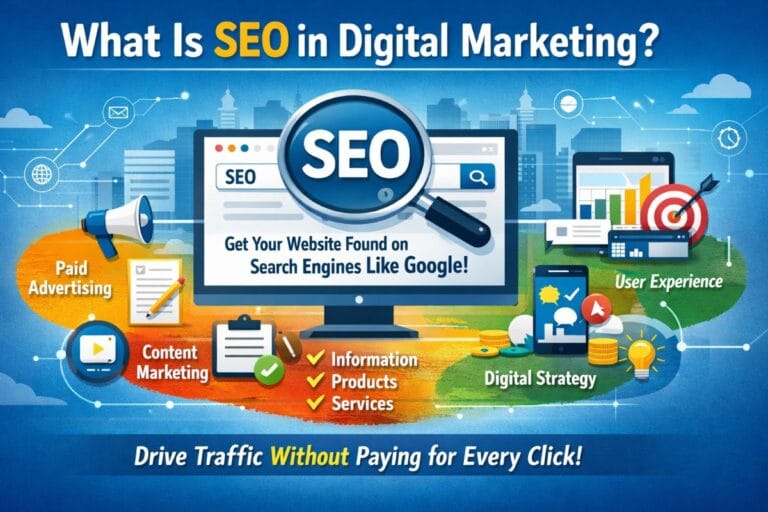
Introduction to Business Website Design
Business website design is no longer just about having an online presence. Today, it’s about creating a digital experience that informs, engages, and converts visitors into customers. In the modern marketplace, your website often forms the first impression of your business. If it feels outdated or confusing, people won’t stick around.
That’s why business website design must balance aesthetics, usability, and performance. A well-designed site builds trust, communicates value, and supports long-term growth. Simply put, your website works as your digital storefront—open 24/7, accessible from anywhere.
This article explores business website design from every critical angle, using practical strategies, proven principles, and clear examples. Whether you’re building a new site or improving an existing one, these insights will help you move forward with confidence.
Why Business Website Design Matters Today
Business website design matters because customer behavior has changed. People research businesses online before making decisions. They compare options, read reviews, and expect smooth digital experiences. If your site doesn’t deliver, they’ll move on—no hard feelings.
A strong business website design helps you:
Establish credibility quickly
Communicate your value proposition clearly
Support marketing and sales efforts
Improve search engine visibility
Moreover, search engines favor sites that deliver good user experiences. Clean layouts, fast load times, and mobile optimization all play a role. According to Google Search Central, usability and performance directly influence rankings.
In short, business website design is not optional anymore. It’s a core business asset.
Core Principles of Effective Business Website Design

User-Centered Design
At the heart of business website design lies the user. Every design choice should support the visitor’s goals. If users can’t find what they need quickly, they’ll leave. That’s just how it goes.
User-centered design focuses on:
Clear information hierarchy
Simple navigation
Readable typography
Accessible layouts
By understanding your audience’s needs, you create a site that feels intuitive rather than frustrating.
Visual Consistency and Branding
Consistency builds recognition. Your colors, fonts, and imagery should align with your brand identity across every page. In business website design, consistency signals professionalism and reliability.
When branding feels scattered, users may question credibility. However, when design elements work together, the site feels intentional and trustworthy.
Mobile-First Approach
More than half of web traffic now comes from mobile devices. That means business website design must prioritize mobile usability from the start.
A mobile-first approach ensures:
Responsive layouts
Touch-friendly navigation
Optimized images
Faster performance
If your site struggles on a phone, you’re losing potential customers – plain and simple.
Key Elements Every Business Website Must Have
Clear Navigation
Navigation should guide users effortlessly. Menus must be logical, labels clear, and paths predictable. In business website design, confusion kills conversions.
Best practices include:
Limiting menu items
Using descriptive labels
Including a visible homepage link
When users feel oriented, they’re more likely to explore.
Fast Load Speed
Speed matters more than most people think. A slow site frustrates users and hurts rankings. Business website design must account for performance from day one.
Ways to improve speed:
Optimize images
Minimize scripts
Use reliable hosting
Every second counts.
Strong Calls to Action
A business website design without clear calls to action is like a sales pitch without a close. Users need guidance on what to do next.
Effective CTAs are:
Clear and action-oriented
Visually distinct
Placed strategically
Whether it’s “Contact Us” or “Get a Quote,” clarity drives results.
Visual Content and Media
Images, videos, and graphics support understanding. However, they must be used wisely. In business website design, visuals should enhance—not distract.
Well-chosen visuals:
Reinforce messaging
Improve engagement
Support accessibility
Balance is key.
Trust, Credibility, and E-E-A-T
Security and Privacy
Trust starts with security. HTTPS, clear privacy policies, and secure forms show users you take their data seriously. Business website design must reflect that responsibility.
Security isn’t flashy, but it’s essential.
Trust, Credibility, and E-E-A-T
Security and Privacy
Trust doesn’t happen by accident. It starts when visitors feel safe using your website. Simple things like secure connections with HTTPS encryption, clear privacy policies, and secure contact forms quietly reassure people that their personal information is handled with care.
E-E-A-T (Experience, Expertise, Authoritativeness and Trustworthiness) is a concept used by search engines to judge how reliable and helpful a website’s content is. It focuses on whether the content feels real and written for people – not just for rankings. In short, E-E-A-T is about being real, being knowledgeable, and being trustworthy. When your website reflects those qualities, both users and search engines respond positively.
Social Proof
Testimonials, reviews, and case studies demonstrate real-world value. They show that others trust you – and that matters.
Including social proof strengthens business website design by reinforcing credibility.
Conversion-Focused Business Website Design
Landing Pages
Landing pages should be focused and goal-driven. Every element must support conversion. In business website design, less is often more. Effective landing pages remove distractions and highlight benefits.
Forms and Lead Capture
Forms should be simple and respectful of user time. Ask only for what you need. Clear labels and reassurance help users complete actions confidently.
Common Business Website Design Mistakes
Even well-intentioned sites can miss the mark. Common mistakes include:
Overloading pages with content
Ignoring mobile users
Weak messaging
Inconsistent design
Avoiding these pitfalls keeps your site effective and credible.
Future Trends in Business Website Design
Business website design continues to evolve. Emerging trends include:
AI-driven personalization
Accessibility-first design
Performance optimization
Minimalist layouts
Staying informed helps you adapt without chasing every trend blindly.
Frequently Asked Questions
1. What is business website design?
Business website design is the process of creating a website that represents a business professionally while helping it achieve its goals. This includes visual design, structure, usability, performance, and content. A good business website is not just attractive—it is easy to use, informative, and built to convert visitors into customers.
2. Why is business website design important for credibility?
For many people, your website is their first interaction with your business. A well-designed website signals professionalism, experience, and reliability. On the other hand, a poorly designed or outdated site can make visitors question whether your business is trustworthy or even legitimate.
3. How does business website design affect user experience?
Design directly influences how easily users can find information, understand your message, and complete actions. Clear navigation, readable text, logical page structure, and fast loading times all make the experience smoother. When users feel comfortable on your site, they are more likely to stay and engage.
4. Does business website design influence search engine rankings?
Yes, it does. Search engines favor websites that are fast, mobile-friendly, well-structured, and easy to use. Design choices such as clean layouts, proper headings, optimized images, and secure connections all support better visibility in search results.
5. What role does E-E-A-T play in business website design?
E-E-A-T stands for experience, expertise, authority, and trust. These qualities help search engines and users judge the reliability of a website. Business website design supports E-E-A-T by presenting information clearly, showing real-world experience, maintaining consistency, and ensuring the site feels safe and credible.
6. Is mobile-friendly design really necessary?
Absolutely. A large portion of website visitors use mobile devices. If your site is difficult to use on a phone or tablet, many users will leave quickly. Mobile-friendly design ensures layouts adapt smoothly, buttons are easy to tap, and content remains readable on smaller screens.
7. How often should a business update or redesign its website?
Most businesses benefit from reviewing their website every one to two years and considering a redesign every two to four years. Changes in technology, user expectations, branding, or business goals can all signal that it’s time for an update.
8. Can small businesses benefit from professional website design?
Yes. A well-designed website helps small businesses compete with larger companies by building trust and clearly communicating value. Even with a limited budget, thoughtful design choices can make a strong impression and support growth.
Conclusion
Business website design is not just about creating something that looks good—it’s about building a digital space that users can trust, navigate easily, and rely on. From user-focused layouts and mobile usability to content quality and security, every element contributes to how visitors experience your brand.
A well-designed website supports credibility, encourages engagement, and helps businesses grow sustainably over time. When design decisions are guided by clarity, consistency, and real user needs, a website becomes a valuable business asset rather than just an online presence.
For businesses that want a website built with these principles in mind, working with an experienced partner can make a meaningful difference. TechWeb offers practical expertise in business website design, helping companies create websites that feel professional, intuitive, and trustworthy—while aligning with real business goals in a competitive digital landscape.